
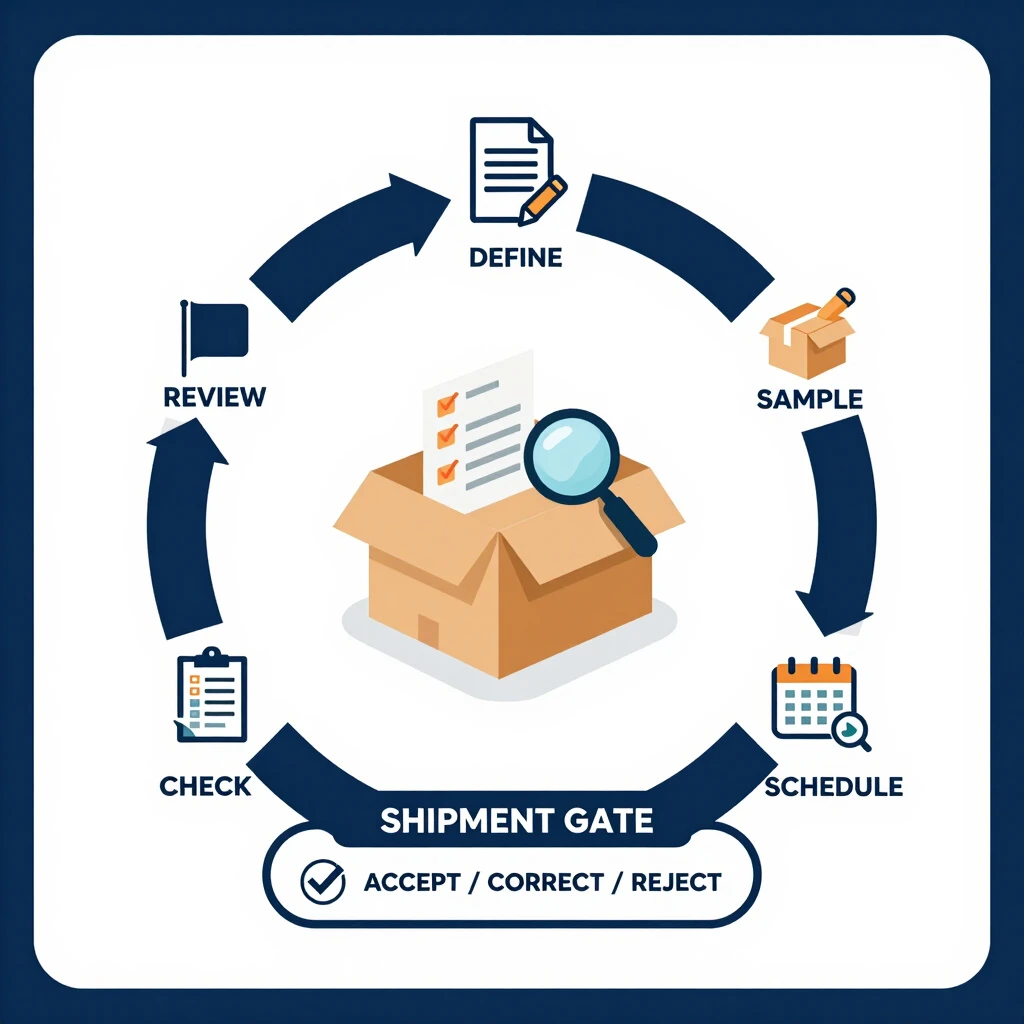
Before production starts, decide what packaging you will accept. That decision is the core of a packaging inspection. A buyer-defined approach has five parts: write down your packaging requirements, review a physical sample before the full run, schedule a check at an agreed point in the production timeline, compare the finished packaging against a checklist you prepared, and review the findings before the shipment moves. If you cannot be at the factory, a sourcing partner such as SourcingAll can coordinate quality inspection and production monitoring for the order.
Why packaging quality matters when sourcing from China
When you source from China, packaging is part of the order you agree with the supplier. You can decide what packaging quality means for your product and write that down. An inspection then compares the produced packaging with your written requirements. This article describes a buyer-defined approach; it is not a standard or official guidance.
If you need context for the entire sourcing flow before you get into packaging, the sourcing article hub covers related decisions in more detail.
Step 1: Define your packaging requirements before production
You can start by writing down what you expect from the packaging. This gives the supplier and any inspector a common reference. The document can be simple, but it should be specific enough for both sides to understand the same physical box.
Topics you can include:
- Purpose and position. Write what the packaging is expected to do, such as retail display, shipping, or both.
- Material and structure. List the outer carton, inner insert, tray, bag, or other parts, and the material for each.
- Dimensions and fit. List sizes for each component and check them against the product.
- Print and artwork. Name the artwork file, the approved version, and where the logo and barcode should appear.
- Assembly and packing. Describe how the product sits in the package, whether labels or leaflets are inserted, and how the package is closed.
- Quantity and timing. Include how many packages are expected, when they will be ready, and where the inspection will occur.
You can also define what "acceptable" means for each item. This separates what you will accept from what you will reject, instead of leaving the factory to guess.
Put a version number and date on the document. Ask the factory to reply in writing that they have received the spec and can produce the packaging to match. If the supplier flags a problem, resolve it before production rather than after.
Step 2: Review packaging samples before full production
You can request a physical sample made with the final materials and processes. Compare the sample against your written requirements from Step 1. Put a real product into it, open and close it, and check the visible surfaces.
If the sample is good, write approval in an email, for example: "sample approved, reference sample no. [number], dated [date]". If you request changes, ask for a new sample and do not treat the previous one as approved. The approved sample can become the reference for later checks.
When packaging consists of several parts, such as a retail carton, an inner divider, and a label, you can ask for each part as a sample, not just the main box.
Step 3: Schedule a packaging quality check at the right time
You can schedule the check during production, after production, or before shipment. The right time depends on your product and how corrections would be handled. You can write the check stage into the production calendar so it is not an unclear request when the goods are finished.
Decide where the check happens: at the packaging plant or at the site where product and packaging are brought together. If the factory sends the packaging to a different warehouse, the check can happen at the warehouse when the packaging is put with the product.
If you do not have someone near the factory, you can ask a sourcing partner to coordinate monitoring and inspection inside the same workflow. See how SourcingAll works for a view of how checks can be placed across a sourcing project.
Step 4: Run the packaging check against your own checklist
You can structure the check as a comparison between the produced packaging and your written requirements. Use the document from Step 1 as the reference, and record what was checked and what was found.
Write observations in concrete terms. For each item on the checklist, note what the spec said, what the packaging showed, and whether the difference is acceptable. Record the pack or batch identity, the number of units looked at, and where the inspection was done.
If you use an external inspector, give them the same document you gave the supplier: the written spec, the approved sample, and the checklist. The inspector can then compare the packaging against the same reference you defined.
Step 5: Review the findings and decide next steps
You can review the inspection findings against your Step 1 requirements and decide what to do next. You can choose to accept the packaging, ask for correction, or reject the batch.
Communicate the decision to the supplier in writing. A short note with the decision, photos, and the date of the next check can give the factory a clear action item. Keep the inspection record for future orders so you can compare results over time.
Packaging quality check briefing checklist
You can use the following topics as a starting point for a briefing checklist. Adapt the list to your product and contract.
- Product and packaging type. SKU name, retail vs. shipping packaging, and every part that belongs to the packaging system.
- Materials and dimensions. Material for each part, external and interior dimensions, and any closure.
- Print, artwork, and branding. File number, revision date, logo or marking position, and acceptable print outcomes.
- Assembly and packing. How the product is inserted, labels or inserts, wrapping, and how the package is sealed.
- Durability and transit expectations. What the packaging has to survive during handling, stacking, and transport to the destination.
- Quantities and timing. Pieces required, production dates, and the date when the packaging must be checked.
- Reporting. Who will inspect, the format of the report, and who receives the findings.
This list is a starting point, not a contract or a standard. Add or remove items based on your product.
Should you inspect packaging yourself or ask a sourcing partner?
You can inspect packaging yourself if you or a team member can be at the factory during the packaging run. You can also ask a sourcing partner to coordinate the inspection. That does not replace your role as the buyer who defines what is acceptable.
SourcingAll provides supplier search and vetting, sample coordination, product development, production monitoring, quality inspection, and logistics coordination for international buyers. Packaging inspection can be included inside this workflow: your document defines the check, and the service performs it. You can review the full list on the SourcingAll services page. If the scope of your packaging is clear, you can request a quote. If you are not sure what should be checked, you can contact SourcingAll and ask about scope first. For a view of what a complete sourcing project, including inspections, can look like, the SourcingAll case studies provide a useful overview.
A sourcing partner is not always necessary. You can decide to delegate based on your order size, supplier experience, and how many orders you are managing.
Frequently asked questions
What should a packaging quality check cover?
It can cover whatever you define in your written requirements. You can include materials, dimensions, print and artwork, assembly, quantity, and the expected handling during transport. The check can be a comparison between the produced packaging and those requirements.
When should the packaging be checked?
You can check during production, after production, or before shipment. You can write the check stage into the production and shipment plan before starting.
What documents should I give the supplier or inspector?
You can give your written requirements, the approved sample, and the same checklist you use to accept the packaging. Ask the inspector to record observations against the requirements, with photos and, if needed, the box numbers. Keeping the reference unchanged can help both sides.
Can SourcingAll help with packaging inspection?
Quality inspection is one of the services SourcingAll provides for international buyers, alongside supplier search and vetting, sample coordination, product development, production monitoring, and logistics coordination. You can describe the packaging to them with a quote request and decide if the scope is right for your needs. For general sourcing questions that come with packaging, the Sourcing FAQ section can take you further.
At its core, a buyer-defined packaging inspection can be repeated and improved over time. Write down your requirements, review a sample, check the finished packaging, and decide before the container. Packaging records from one order can become a reference you improve on the next order.