
Here’s a scenario that plays out more often than it should: you approve a sample, pay the deposit, wait weeks for production, and then the container arrives with the wrong color, loose stitching, or crushed packaging. By the time you see the damage, the goods are thousands of miles away, and fixing them means shipping everything back, paying for new production, or negotiating a partial refund. That’s the moment a sourcing agent is supposed to prevent.
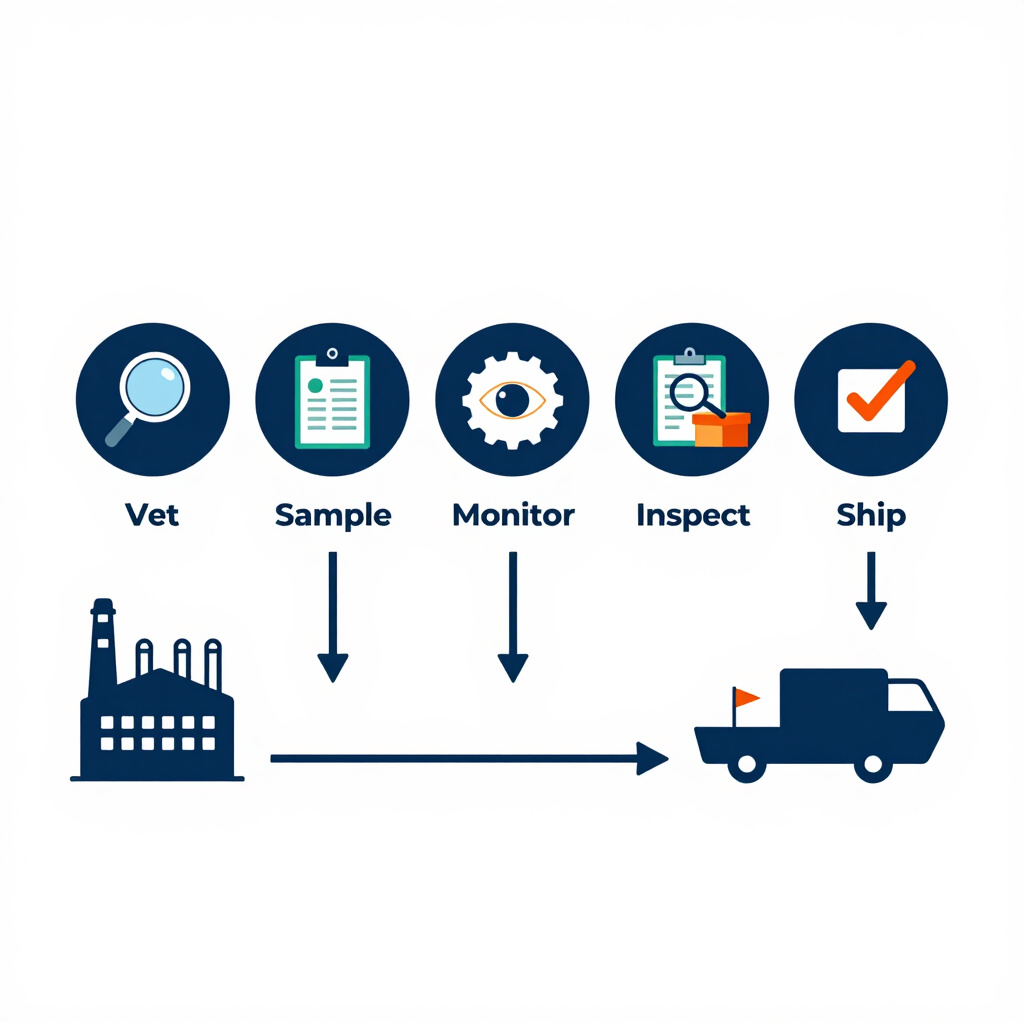
A sourcing agent builds quality checks into every key stage, from choosing the factory to coordinating the final handoff. They catch problems while the goods are still on the production floor, giving you a chance to correct issues before you ever see the finished products. This article walks through that general process. The examples are hypothetical, not client stories.
1. Where Quality Problems Start in China Sourcing
Quality issues can start in several places. One common category is unclear specifications. If you say “good quality fabric” without defining weight, composition, or color tolerance, the factory will interpret it its own way. Material substitutions happen when a supplier tries to cut costs or when the original material is unavailable. Production shortcuts, like skipping a curing step or using a thinner coating, can occur when deadlines tighten. Packaging errors, such as wrong carton dimensions or missing barcodes, can cause damage during shipping.
Buyers often only see these defects after shipment, when the goods are thousands of miles away. At that point, rework means shipping everything back, paying for new production, or negotiating a partial refund. Sourcing agents are positioned to catch issues earlier because they work at the source. They can walk the factory floor, check raw materials, and compare finished goods against your approved sample while there is still time to fix them.
2. Step 1: Supplier Vetting and Factory Evaluation
The first line of defense is choosing the right factory. Supplier search and vetting helps confirm that a potential partner can actually meet your specifications. A sourcing agent will look at the factory’s production capacity, equipment, and quality management practices. They might check whether the factory has experience with your product type and whether they have a history of quality issues.
Vetting is not a guarantee, but it filters out the worst candidates. A factory that lacks basic quality controls will likely produce inconsistent goods. A factory with modern equipment and trained staff is more likely to follow your specifications. SourcingAll offers supplier search and vetting as part of its services, helping international buyers start with a capable partner.
3. Step 2: Product Specifications and Sample Coordination
Once you have a supplier, the next step is locking down exactly what you want. Clear product specifications define materials, dimensions, colors, packaging, and performance expectations. A spec sheet should be detailed enough that a different factory could replicate the product without asking questions. Include tolerances, like acceptable color variation or stitching density.
Sample coordination turns those specifications into a physical reference. You review a pre-production sample, approve it, and that sample becomes the benchmark for later inspections. Sourcing agents help manage this process. They communicate your feedback to the factory, ensure the sample matches the spec, and keep a record of what was approved. A signed-off sample is your strongest tool during production monitoring and pre-shipment inspection. If the factory deviates from it, you have a clear basis for rejection.
SourcingAll offers sample coordination and product development support, helping you refine your product before mass production begins.
4. Step 3: Production Monitoring During Manufacturing
Waiting until the end to check quality is risky. Production monitoring allows agents to spot problems while the factory is still making the goods. This might happen at the start of production, when raw materials are being cut, or midway through, when part of the order is complete. The goal is to catch issues early, when corrections are cheap and fast.
Hypothetical example: if the factory is using a different zipper than the approved sample, the agent can flag it after the first batch. The factory can switch to the correct zipper before thousands of units are produced. This is a hypothetical example, not a SourcingAll client story.
Monitoring also covers workmanship. Are the seams straight? Is the print aligned? Are the components assembled correctly? Early detection means the factory can rework the affected units without delaying the entire order.
This stage reduces the chance of discovering defects only at final inspection. It also sends a message to the factory that you are paying attention, which can improve their diligence. SourcingAll offers production monitoring as part of its service list.
5. Step 4: Pre-Shipment Inspection Before Goods Leave the Factory
Pre-shipment inspection is the final quality checkpoint. It happens when production is complete and a percentage of goods is ready for shipment. Inspectors typically compare finished goods against the approved sample and specifications. They check dimensions, materials, workmanship, function, and packaging. They also verify quantity and labeling.
If issues are found, the buyer can decide whether to reject, repair, or rework before shipment. This is the last chance to stop defective goods from leaving the factory. A sourcing agent can flag defects, missing items, or packaging problems and coordinate with the factory to fix them.
Hypothetical example: a sourcing agent notices the factory used a slightly different fabric shade than the approved sample. The agent flags it before shipment, and the factory reworks the affected units. This is a hypothetical example, not a SourcingAll client story.
SourcingAll offers quality inspection as part of its services.
6. Step 5: Logistics Coordination and Final Checks
Quality does not end at the factory gate. Logistics coordination covers shipping arrangements, documentation, and delivery planning. Proper packaging and loading checks can prevent damage during transit. If cartons are overfilled or pallets are stacked incorrectly, goods can arrive crushed or broken.
Agents can also ensure the correct quantity and labeling before goods leave the factory. This is the last opportunity to catch problems before the buyer sees the products. A simple check of the bill of lading against the order can prevent shipping the wrong items or the wrong quantity. SourcingAll offers logistics coordination as part of its services, helping you manage the final handoff.
7. How to Work With a Sourcing Agent for Quality Control
To get the most out of a sourcing agent, you need to prepare. Share clear product specifications and approved samples with your agent. The more detail you provide, the easier it is for them to spot deviations. Agree on quality checkpoints and communication expectations before production starts. Will you receive weekly updates? What happens if an issue is found? Who has the authority to approve a rework?
Ask how the agent will report findings. A good agent will provide photos, measurements, and a clear pass/fail recommendation. They should also explain what happens if issues are found, including the cost and timeline for corrections. Use the agent’s services as a system, not a single inspection. Supplier vetting, sample approval, production monitoring, and pre-shipment inspection work together to reduce risk.
Here is a checklist of quality checkpoints to discuss with your sourcing agent:
- Specifications: Are they complete and unambiguous?
- Sample approval: Has the pre-production sample been signed off?
- Production monitoring: When and how often will checks happen?
- Pre-shipment inspection: What percentage of goods will be inspected?
- Packaging and loading: Are cartons and pallets properly prepared?
For a deeper look at the process, see How We Work and Our Services.
8. Frequently Asked Questions About Quality Inspection for China Sourcing
What are common quality problems when sourcing from China?
Common problem categories include unclear specifications, material substitutions, workmanship issues, and packaging errors. These problems can stem from a lack of detailed documentation or a factory trying to cut costs.
How do sourcing agents catch quality issues before shipping?
Through supplier vetting, sample coordination, production monitoring, and pre-shipment inspection. Each stage catches different types of issues, and together they provide a comprehensive safety net.
What does a pre-shipment inspection involve?
Inspectors compare finished goods against approved samples and specifications. They check dimensions, materials, workmanship, function, packaging, and quantity. The goal is to identify any deviations before the goods are shipped.
How can I ensure my products meet specifications?
Document specifications in detail, approve a physical sample, and use staged quality checks. A sourcing agent can help you implement these steps and communicate with the factory.
What are the benefits of using a sourcing agent for quality control?
Local presence, earlier detection, and coordination across the process. An agent can visit the factory, monitor production, and resolve issues in person, which is difficult to do remotely.
For more answers, check the FAQs page.
9. Get Help With Your China Sourcing Quality
Managing quality across a China sourcing project takes time, local knowledge, and attention to detail. SourcingAll offers supplier search and vetting, sample coordination, product development, production monitoring, quality inspection, and logistics coordination. These services are designed to help international buyers manage quality throughout the sourcing process.
No service can guarantee a defect-free order, but a structured approach can reduce risk. If you are planning a sourcing project and want professional support, learn more about Our Services, read Related Articles, or Get a Quote. You can also Contact Us to discuss your specific needs. For background on the team, see About Us.