
Imagine you’ve just received a container of products from a new supplier in Shenzhen. The samples looked great, but the actual goods have mismatched colors, broken parts, and packaging that doesn’t match your spec. This is a hypothetical scenario, but it’s the kind of problem that structured quality control is designed to prevent. You don’t need to be a quality engineer to avoid this outcome. You need a system of checkpoints that verify what the factory is making before it ships.
What is quality control in China sourcing?
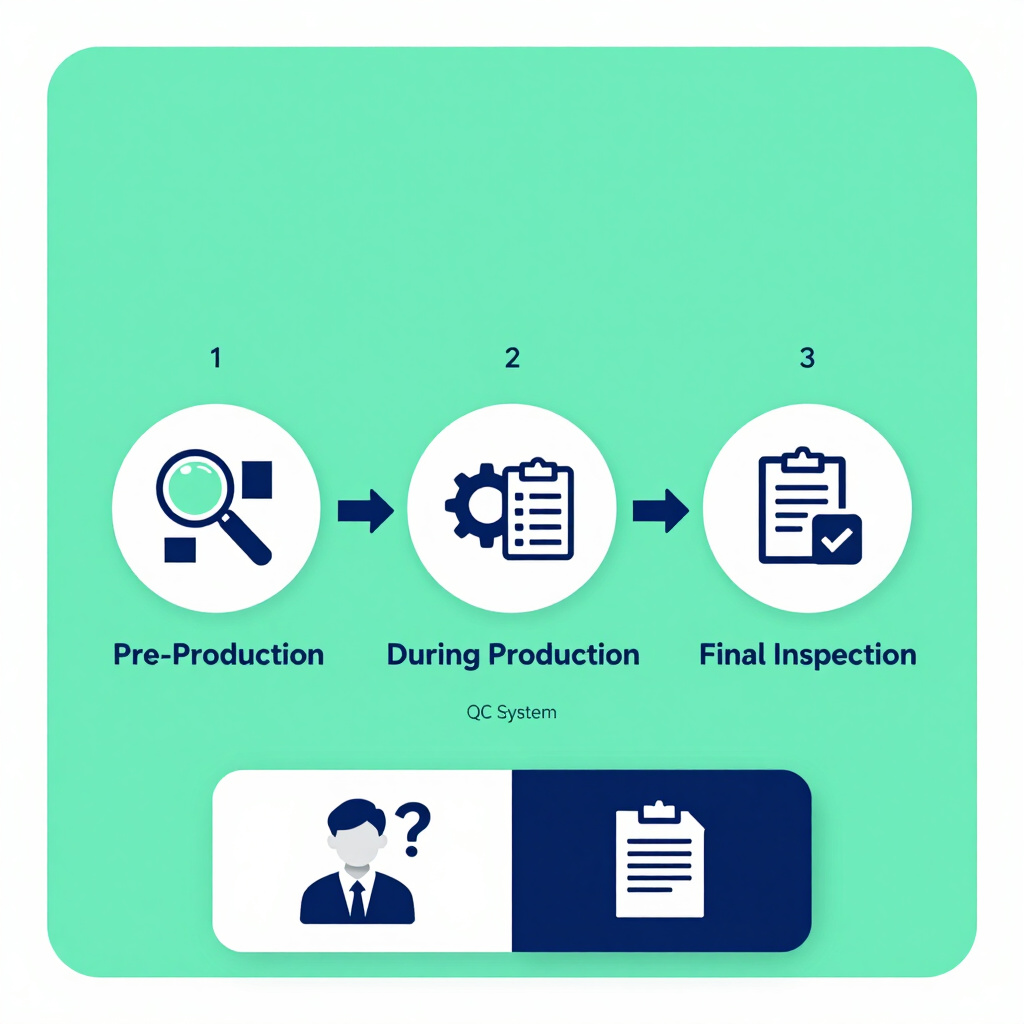
Quality control in China sourcing is the set of checks you use to confirm that manufactured products meet the standards you agreed on with your supplier. It is not a single final inspection. It is a multi-stage process that protects product conformity and reduces the risks of defects, delays, and compliance issues. According to SourcingAll’s step-by-step sourcing process, effective quality control involves three standard checkpoints: pre-production checks, during-production inspections, and final random inspections.
Why quality control is non-negotiable for small businesses and startups
When you’re a small buyer, you don’t have the buffer of a large procurement team or a dedicated QA department. Without structured quality control, the risks of defects, delays, and compliance issues are higher. Structured QC helps catch problems early and avoid expensive rework. SourcingAll’s client case studies show that implementing structured quality control processes reduces costly returns and builds long-term supplier accountability. Each checkpoint you add gives you a chance to verify quality before your goods are shipped.
Step 1: Pre-production checks. Verify materials and samples before manufacturing begins
Pre-production checks happen before the factory starts cutting, molding, or assembling your order. This is when you verify that the materials and components match your specifications and that the samples you approved are actually reproducible at scale. Sample coordination is part of the standard sourcing workflow. Catching issues at this stage avoids expensive rework later. This is one of the three standard QC checkpoints in China sourcing practice, as described in SourcingAll’s related China sourcing guides.
Step 2: During-production inspections. Monitor quality while your order is in production
Once production is underway, a during-production inspection checks that the factory is following your specifications in real time. This checkpoint helps catch issues early, before they become expensive to fix. Production monitoring is a core element of SourcingAll’s quality inspection services. This checkpoint is standard practice in China sourcing, and it’s where many quality problems are addressed while the order is still being made.
Step 3: Final random inspections. Confirm finished goods meet standards before shipment
The final random inspection checks a sample of finished goods against your agreed standards before shipment. This pre-shipment verification is part of standard quality inspection services, and it helps confirm that the products you receive match what you ordered. It’s most effective when combined with the earlier checkpoints, because issues caught during production are less likely to appear in the finished goods.
How to set inspection standards and handle defective goods
Before any inspection happens, you need to define what “acceptable” means. Write down your standards for materials, dimensions, function, appearance, and packaging. Share this document with the factory and with your inspector. A common question is what AQL levels to use. SourcingAll’s quality control FAQs cover this and other common questions. You also need to decide in advance how to handle defective goods: rework, replacement, or rejection, and who bears the cost. Document the agreed approach in your purchase agreement. The SourcingAll team has experience in China manufacturing and quality assurance, and they offer practical guidance on these decisions.
In-house checks vs. third-party inspection: which approach fits your budget?
You have three options for quality control: rely on the supplier’s self-reporting, do the checks yourself, or hire a third-party inspection service. For most small businesses and startups, third-party inspection is often more cost-effective than hiring in-house QA staff in China. This is a practical judgment, not a statistic. Hypothetically, a startup founder could spend a week in China visiting a factory, but that week has an opportunity cost. A professional inspector can do the same check in a day, with a report you can act on. Third-party inspection fits within an end-to-end sourcing model that includes production monitoring and quality inspection, as offered by SourcingAll.
How SourcingAll builds quality control into the sourcing process
Quality control is part of SourcingAll’s end-to-end sourcing support, which covers supplier search and vetting, sample coordination, product development, production monitoring, quality inspection, and logistics coordination. The service model helps buyers verify product quality before shipment. The sourcing team has experience in China manufacturing and quality assurance, offering practical guidance to international buyers. The client case studies on their site demonstrate that structured QC reduces costly returns and builds long-term supplier accountability.
China sourcing quality control checklist
Here’s a practical checklist to guide you through the three checkpoints. This reflects standard practice, not a guarantee of results, and it assumes you’ve agreed on standards in writing.
- Before production: Define product specifications in writing (materials, dimensions, function, appearance, packaging). Confirm the supplier. Review and approve samples. Confirm materials before manufacturing begins.
- During production: Schedule a mid-production inspection at a point where defects can still be corrected. Monitor production progress against your timeline. Address any findings from the inspection promptly.
- Before shipment: Conduct a final random inspection on finished goods. Review the inspection report. Resolve any defects before goods leave the factory.
Frequently asked questions about quality control in China sourcing
What does quality control in China sourcing actually cover? It covers the checks you use to verify product conformity at multiple stages: pre-production, during production, and before shipment. It is not a single final check.
When should inspections happen? Ideally at all three checkpoints. Pre-production checks catch material and sample issues. During-production inspections catch defects while they’re fixable. Final random inspections confirm finished goods meet standards before shipment.
How do I set inspection standards? Write down your specifications for materials, dimensions, function, appearance, and packaging. Share them with the factory and your inspector.
What are AQL levels and how do I choose? AQL levels are a common question in China sourcing. The right approach depends on your product and risk tolerance, so it’s best to get qualified guidance from a sourcing partner or inspector. SourcingAll’s quality control FAQs cover this topic in more detail.
How do I handle defective goods? Decide in advance whether you’ll accept rework, replacement, or rejection, and who pays. Document this in your purchase agreement.
For more answers, check SourcingAll’s quality control FAQs.
Quality control in China sourcing is a system, not a single event. If you don’t have the time or expertise to run these checkpoints yourself, a sourcing partner can handle them for you. SourcingAll offers supplier vetting, production monitoring, and final inspection as part of one process. If you’re ready to protect your next order, contact our sourcing team or request a quote.