
Why the sea freight vs air freight decision matters
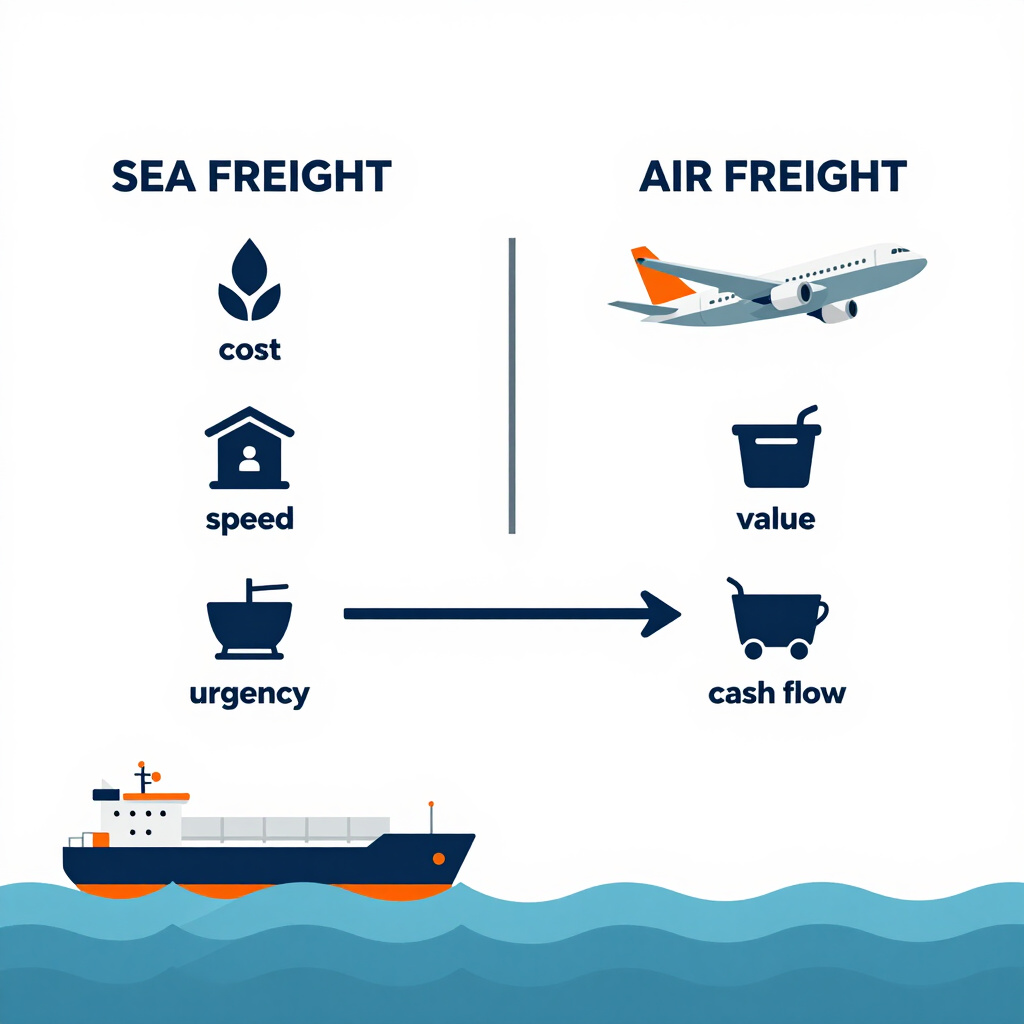
Your supplier in Shenzhen has finished the first production run. The goods are packed. Now you have to decide how to move them: sea freight or air freight. There is no universal answer. The right choice depends on shipment size, product value, urgency, cash flow, and product characteristics. Choose sea freight when cost and shipment size matter more than speed. Choose air freight when speed and reliability matter more than cost. Because freight costs and transit times change with route, carrier, and market conditions, the decision framework below will help you weigh the trade-offs. Confirm current rates and schedules with a freight forwarder or logistics partner. SourcingAll offers logistics coordination for international buyers. You can read more About us.
What sea freight from China involves
Sea freight is the slower, cheaper way to move goods from China. The specific container options, cost drivers, and transit times depend on your shipment; confirm them with a logistics partner.
Consider a hypothetical example: a small kitchenware brand ships 2 cubic meters of goods by LCL. The freight quote is lower per unit than air freight, but the shipment may sit at the port for days before loading and again before customs clearance. The buyer saves on transport cost but must plan for a longer lead time.
What air freight from China involves
Air freight is the choice when speed is the priority. Cost drivers and transit times vary by shipment, so confirm them with a logistics partner.
Here is a hypothetical situation: an ecommerce seller needs an urgent restock of high-value electronics before a sales event. Air freight raises the transport cost per unit, but the goods arrive in time to capture the sales window. The buyer avoids lost revenue and the cost of holding inventory for weeks.
Sea freight vs air freight: a side-by-side comparison
Specific cost and transit time data are pending verification, so a detailed comparison table is not included here. Use the decision framework in the next section to evaluate your shipment. For personalized guidance, see Sourcing services.
A decision framework for choosing your freight mode
Use this checklist to score your shipment. For each criterion, decide whether sea freight or air freight fits better. There is no perfect score; the point is to make the trade-off explicit.
- Shipment size and weight: Larger and heavier shipments usually favor sea freight. Small, light, or high-value shipments can justify air freight.
- Product value and margin: Higher-margin products can absorb air freight cost. Low-margin products may not.
- Urgency: If you need goods by a fixed date, air freight reduces lead time risk. If you can wait, sea freight gives you more options.
- Cash flow: Sea freight ties up cash in inventory for longer. Air freight costs more per unit but can reduce the amount of stock you need to hold.
- Product characteristics: Perishable, fragile, or time-sensitive products may need air freight. Durable, non-perishable goods can go by sea.
- Destination and customs requirements: Confirm with your logistics partner.
Calculate total landed cost, not just the freight quote. Add freight, insurance, customs duties, inland haulage, and the cost of holding inventory during transit. A cheaper freight quote can become more expensive if it forces you to hold extra safety stock or miss a sales window.
A hypothetical comparison: two small businesses order from the same supplier. One sells high-margin electronics and needs stock before a product launch; air freight makes sense. The other sells low-margin furniture and can wait; sea freight makes sense. The same supplier, the same origin, but different freight modes because the business priorities differ.
For an explanation of how SourcingAll coordinates logistics from supplier to shipment, see How we work.
How freight choice affects inventory and cash flow
Sea freight means longer transit times. You need to order earlier and hold more safety stock to cover delays. Air freight shortens lead times and cuts safety stock, but it increases transport cost per unit.
The real trade-off is between inventory holding cost and freight cost. Money tied up in storage and capital while goods sit in transit could be used elsewhere. A slower, cheaper shipment can strain cash flow for weeks. A faster shipment costs more upfront but preserves flexibility.
In a hypothetical example, a buyer orders 1,000 units. Sea freight costs less per unit but the goods arrive in a month. Air freight costs more per unit but the goods arrive in days. If the product sells quickly, air freight may be worth the extra cost because the buyer can reorder sooner and avoid stockouts. If it sells slowly, sea freight is likely the better use of cash.
For examples of how freight choices play out in real sourcing workflows, see Case studies.
Environmental and sustainability considerations
Environmental impact depends on shipment weight, distance, mode, and carrier practices. If sustainability is a priority, ask carriers and freight forwarders for emissions data and what options they offer.
You might also consolidate shipments, use more efficient packaging, or choose carriers with newer fleets. These choices can change the picture, but avoid absolute claims about carrier performance or environmental impact without data.
SourcingAll can help you ask the right logistics questions, but the final trade-off is yours.
Common pitfalls and hidden costs
Choosing a freight mode based only on the quote is a mistake. Hidden costs can change the total.
Before shipping, get a full cost breakdown that includes any potential fees. Clarify Incoterms with your supplier so you know who pays for what. And plan buffer time into your schedule, especially for sea freight.
A hypothetical example: a buyer accepts a low air freight quote, but the shipment is bulky. The airline charges dimensional weight, and the final cost is much higher than expected. The buyer did not ask for a breakdown of chargeable weight before booking.
For common logistics questions, see Preguntas frecuentes.
How a sourcing agent or logistics partner can help
A sourcing agent can help you evaluate freight options, coordinate with suppliers, and manage documentation. SourcingAll offers supplier search and vetting, sample coordination, product development, production monitoring, quality inspection, and logistics coordination. That means we can help you compare options, ask the right questions, and avoid costly mistakes.
If you are unsure which freight mode fits your shipment, start with a conversation about your product, timeline, and budget. See Sourcing services o Contact us.
Frequently asked questions
What are the typical cost differences between sea freight and air freight from China?
Cost differences depend on many factors, including shipment size, weight, route, and market conditions. Confirm current rates with a logistics partner.
What are the average transit times for sea freight vs air freight from China?
Transit times vary by route, port congestion, and carrier schedules. Confirm current schedules with a logistics partner.
What factors should small businesses consider when choosing between sea and air freight?
Consider shipment size, product value, urgency, cash flow, product characteristics, and destination requirements. Use the checklist in the decision framework section.
How do sea and air freight affect inventory management and cash flow?
Sea freight ties up cash in inventory for longer. Air freight costs more per unit but can reduce lead times and safety stock. The right choice depends on your sales cycle and cash position.
What are the environmental implications of each method?
Environmental impact depends on many factors. Ask for emissions data before deciding.
What are common hidden costs in freight from China?
Get a full cost breakdown before shipping to avoid surprise fees.
How can a sourcing agent help with freight decisions?
A sourcing agent can help you compare options, coordinate with suppliers, manage documentation, and avoid costly mistakes. SourcingAll offers logistics coordination as part of its services.
For more questions, see Preguntas frecuentes.
In short, choose sea freight when cost and shipment size matter more than speed, and air freight when speed and reliability matter more than cost. Calculate total landed cost, plan buffer time, and confirm current rates and schedules with a logistics partner.
If you want help evaluating your freight options, get a quote o contact us. For more sourcing and shipping guides, see related articles.